Monday, 18 October 2010

The Elephant Man (1980)

Image copyright Brooksfilms
Unlike the other films in the "shapeshifters" series, this film is based upon a real story, and is in many ways more of a biopic than a horror film.  However, it does use many of the conventions of that genre, although to a considerably different effect.  For example, it uses the traditional technique of not directly showing the "monster", rather only suggesting at its appearance through things such as its shadow, or the seemingly obligatory screaming young woman when confronted by it.
The most obvious stylistic feature of this film however is the fact that it is filmed in black and white, which helps to evoke the setting of victorian london, with its gloom and smog, its downtrodden masses and refined society.  Perhaps in an attempt to recall the black and white films it is trying to echo, each scene ends with the screen fading to black, creating an effect akin to watching a play that has been filmed, rather than the (relatively) modern creation it is.  The overall effect is to produce a film that the New York Times film reviewer Vincent Canby described as "...a handsome, eerie, disturbing movie."
Image copyright Brooksfilms
This film does not rely upon special effects, apart from the obvious necessity of the makeup worn by John Hurt as the eponymous character.  Instead, the film is carried by the masterful performances given by Anthony Hopkins as the doctor (Frederick Treves) torn between his desire to help his patient John Merrick "the elephant man" and his fear that he has merely changed the social standing of the people who come to stare at John, and John Hurt as the eponymous "freak" who despite his misfortune does not rage against the cruelties of the world, but rather endures it stoically.
The critical reaction to the film was not very favourable, with Rodger Ebert asserting that "The film's philosophy is this shallow: (1)Wow, the Elephant Man sure looked hideous, and (2)gosh, isn't it wonderful how he kept on in spite of everything?".  There may be some basis for the latter criticism, since John Merrick was in no way responsible for his condition, and had little choice but to endure his fate.  
In my opinion however, the film does an excellent job of portraying the struggles that both John Merrick and Dr Treves go through, the former struggling to get people to see past his appearance to the man inside (indeed, the most memorable scene in the film involves him shouting to a crowd that "I am not an animal.... I... am... a... MAN!"), while the latter wrestles with the fear that the real reason he has taken care of John Merrick is to advance his own career.
Overall, I think that this film is best summed up by the BBC film reviewer Almar Haflidason when he says "It would take a heart of stone not be moved by "The Elephant Man"

Saturday, 16 October 2010

The Company of Wolves (1984)

Image copyright ITC Entertainment
The first thing that you notice when you watch this film is the strangely ambigous setting.  From a contemporary opening, the story appears to enter the dreams of a teenage girl, Rosaleen (Sarah Patterson), which take the form of a medieval village in the depths of a deep dark wood inhabited by wolves.  However, the wolves in question supposedly come in two forms, described as "hairy on the outside" or the considerably more dangerous "hairy on the inside".
A key aspect of the film is the technique of telling stories in the form of dramatised scenes interspersed with the "real world" as it were.  It is in the first one of these stories that we first see that the "hairy on the inside" wolves are in fact werewolves, via a particularly gruesome transformation sequence.
Image copyright ITC Entertainment
The character of Rosaleen's dreamworld grandmother (Angela Lansbury), is responsible for imparting the cautionary tales about wolves (of both kinds) to Rosaleen, under the guise of preparing her for adult life and the perils it holds.  Whilst on the surface this would appear to be a sensible precaution, particularly since Rosaleen's older sister has just been killed by wolves, the method of delivery emphasises what the New York Times film critic Vincent Canby described as her "eerily kind, actually menacing" character.  There is in fact some symbolism to suggest that the grandmother is in fact a witch, in the form of a (occasionally animate) stoat skin that she wears as a stole.
There is in fact a heavy vein of symbolism running throughout the entire film, from the werewolves (with their implication that men are predators out to "devour" adolescent girls) to the peculiar contents of the eggs in a birds nest (tiny stone statues of human babies, symbolising the onset of sexual maturity).  This is accented by the not-quite-real village and forest in which the film plays out, where boa constrictors can be found draped over tree branches, and toads sit in the snow by an abandoned stone well.  Indeed, Time Out's film critic Neil Jordan described it as a "Gothic landscape of the imagination...perfectly conveyed by film"
The overall tone of this film is far darker than the modern, "child-friendly" version of Little Red Riding Hood, and is closer to the original version of the story written down by the brothers Grimm.  There is no clear happy ending , merely an ambiguous scene that plays with our notions of reality and the dream world.  I feel that the film critic, Robert Ebert, sums up the film perfectly when he says "The movie has an uncanny, hypnotic force; we always know what is happening, but we rarely know why, or how it connects with anything else, or how we can escape from it, or why it seems to correspond so deeply with our guilts and fears.  That is, of course, almost a definition of a nightmare".

Thursday, 14 October 2010

Rocket animation Maya project

Frame 001

Frame 026

Frame 051

Frame 076

Frame 101

Frame 126


Frame 150


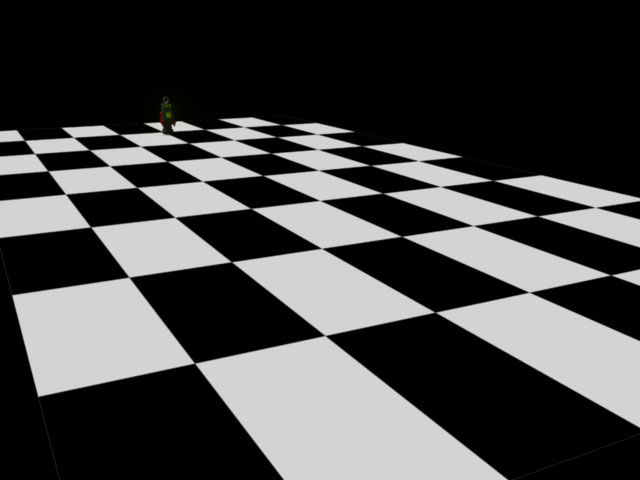
Robot Animation Maya Project

Frame 001

Frame 026

Frame 051

Frame 076

Frame 100
It doesn't really show up, but I made the legs shuffle forwards and backwards.